Decision log
Structured capture of context, rationale, confidence, risks, stakeholders, and situational notes. Fast to complete, impossible to lose.
Outcome checkpoints
Schedule reviews at 30, 90, 180 days, or custom horizons. Compare what you expected with what happened — at exactly the right moment.
Intelligence dashboard
Calibration curve, quality score trends, bias detection, and pattern analysis across your full decision history.
AI risk assessment
Structured risk analysis with severity scoring and mitigation suggestions. Surface what you might have missed before committing.
Scenario and assumption tools
Projections, scenarios, and cashflow models — linked to the decision that generated them, not buried in a spreadsheet.
Team workspaces
IC voting, shared decision review, granular permissions. Shareable briefs for external stakeholders via secure expiring links.
The product, not a mockup
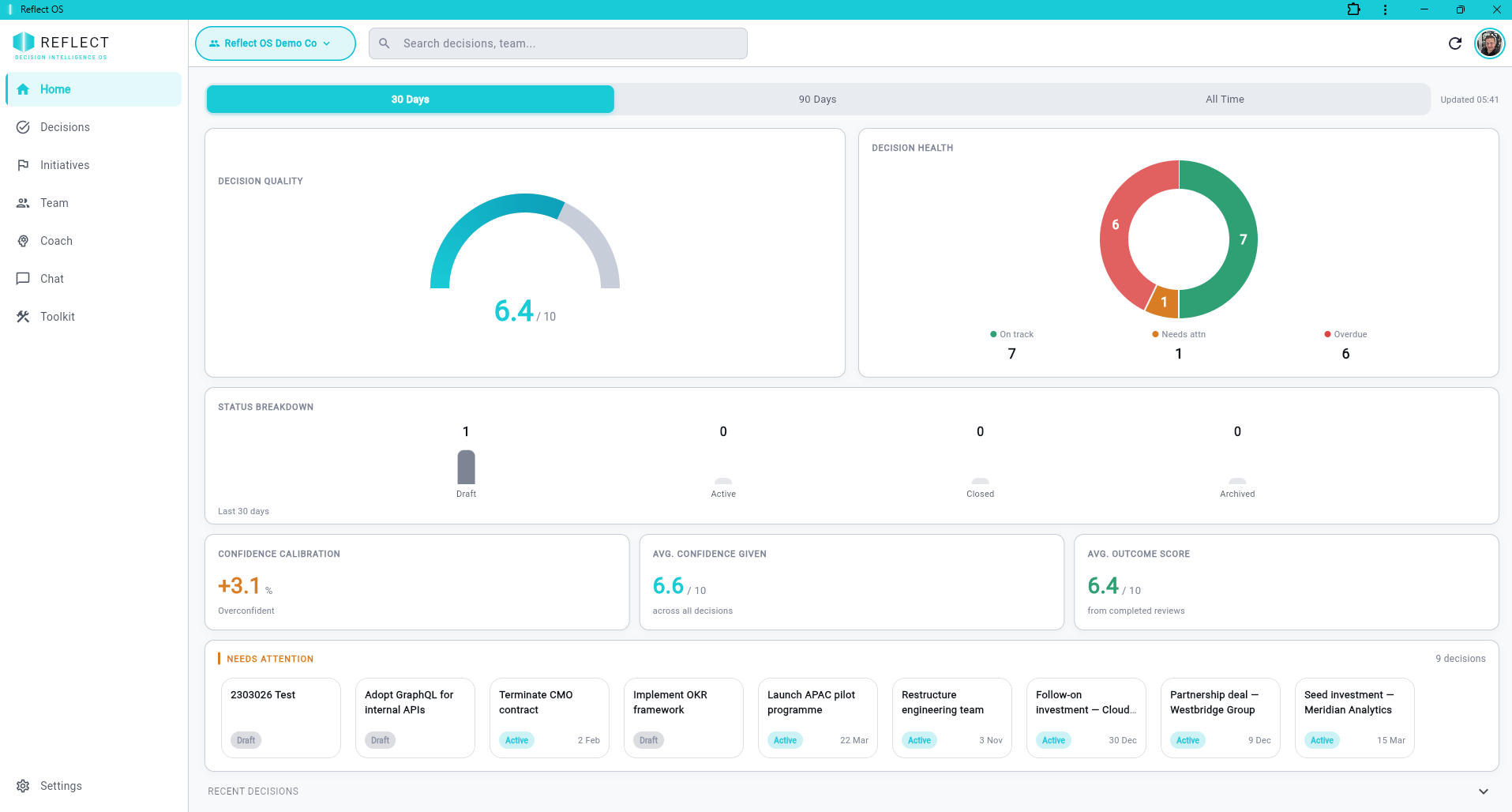
Decision health dashboard with calibration score and review schedule
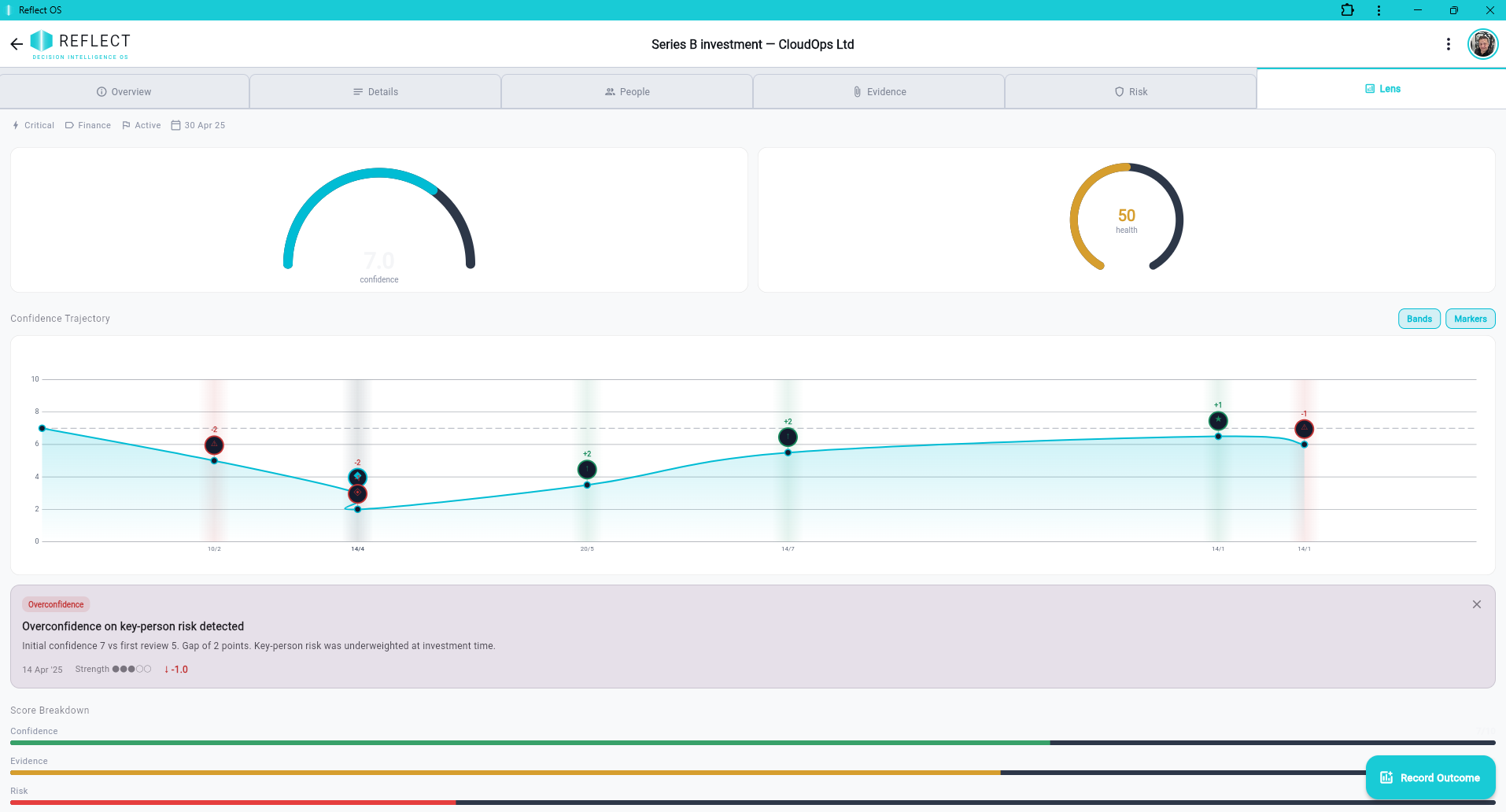
Confidence calibration curve with pattern detection across your decision history
Why not a spreadsheet or Notion?
Spreadsheets and general-purpose tools like Notion are excellent at storage. They are not built for the closed loop. They don't prompt you when an outcome is due. They don't track your confidence calibration over time. They don't surface the pattern that you're consistently overconfident in a specific category of decision. They don't generate AI risk assessments before you commit. And they don't produce a defensible audit trail when governance requires one.
Reflect OS is infrastructure. It does one thing — and the one thing it does, nothing else does.
| Reflect OS | Spreadsheet | Notion / Docs | |
|---|---|---|---|
| Structured decision capture | ✓ | — | — |
| Scheduled outcome checkpoints | ✓ | — | — |
| Confidence calibration tracking | ✓ | — | — |
| Bias and pattern detection | ✓ | — | — |
| AI risk assessment | ✓ | — | — |
| Audit trail for governance | ✓ | — | — |
| General-purpose storage | ✓ | ✓ | ✓ |